A Slower Route Home: Walking Britain’s Frosty Mornings Without a Fall
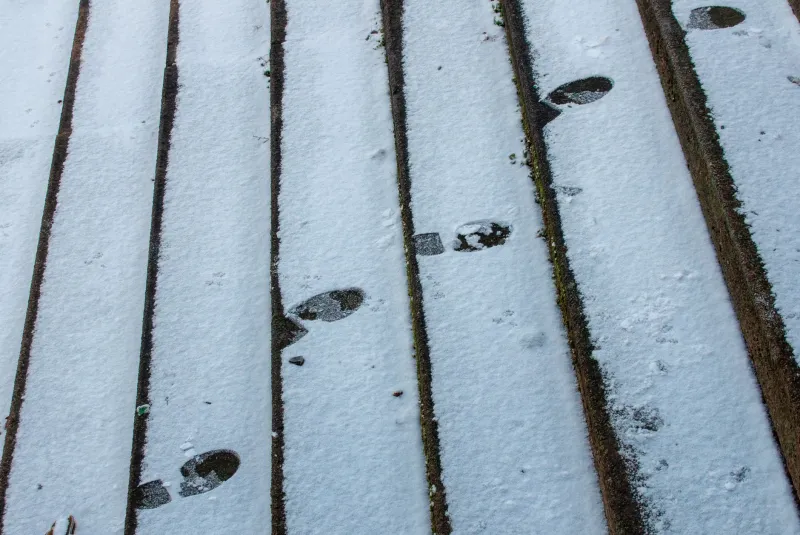
There is a particular sound to a British winter morning after a hard frost: a soft crunch, then a skid, then a very quiet swear word. The pavements look harmless enough, often just damp, but the shine in the shade gives it away. Ice is not always dramatic. It is often a thin, grey film on a side street, a bridge, or the path beside the park.
The aim here is not to frighten you indoors until April. It is simply to walk with a little more thought. A slower route home, a pair of boots by the door, and a few balance habits can make the difference between a brisk morning and a painful week.
Read the pavement, not just the sky
Forecasts help, but pavements have their own microclimate. The cold spots are usually the obvious ones once you start looking: shaded streets, north-facing paths, bridges, steps, and anywhere the sun has not reached since yesterday. Frost often lingers where a puddle sat the day before. Freezing rain can leave a clear glaze that looks like wet tarmac.
Try to look a few paces ahead rather than straight down at your feet. Keep your phone in your pocket. Take shorter steps, keep your feet a little wider apart, and let your arms swing freely for balance. If there is a handrail, use it. If you are with someone, it is tempting to link arms, but if one of you slips, the other often follows. A steadying hand on a rail is better than a chain of two.
Shoes that say no to ice
The best winter footwear is deeply unfashionable in a very reassuring way. Look for a thick rubber sole with a clear tread pattern, not a smooth fashion sole or a worn-down heel. Wellies can grip well on mud but may be cold and stiff on pavements; smart boots with a leather sole are best saved for dry days. If you walk on rural paths or steep lanes, detachable grips can help, but they are not a magic answer on all surfaces and should be checked before use.
Keep your winter boots by the door, not at the back of a cupboard. The pair you actually wear is the pair that helps. And check the tread now and then. A boot that was grippy two winters ago may have smoothed itself out quietly.
Plan a gentler line
A safer route is not always the shortest one. Main roads are more likely to have been gritted, and busy pavements are often less icy than quiet cut-throughs. Council grit bins are useful to know about, but do not assume every path has been treated. Leave five extra minutes so you are not rushing. Rushing is its own hazard.
If you use a walking stick, check the rubber ferrule at the bottom. A worn ferrule is like a bald tyre. Carry your phone in a pocket rather than a hand, keep your hands free where you can, and consider a small rucksack instead of a heavy shopping bag that swings your balance off course. Tell someone your rough route if the pavements are bad, especially if you live alone.
Balance, built quietly
Balance is a habit, not a talent. At home, hold the kitchen counter and stand on one foot for a few seconds, then the other. Walk heel-to-toe along a clear hallway. Practise getting up from a chair without using your hands, if you can do so safely. These small moments add up. If you feel dizzy or unsteady on your feet, mention it to a GP or pharmacist rather than simply avoiding the outdoors. Sometimes a medication review or a vision check is the useful next step.
If you feel yourself going
Try not to fight the fall with stiff arms. Tuck your chin, let your body relax a little, and aim to land on a softer part of yourself if you can. Do not try to get up instantly. Stay still for a moment, check how you feel, and ask for help if someone is nearby. Shock can make a small tumble feel bigger, and the cold ground is no place to prove a point.
After a fall: the first few minutes
Check for pain in your head, hip, wrist, and back. If you have hit your head, even lightly, pay attention. If you take blood thinners or have a bleeding disorder, a head knock needs proper advice even if you feel fine. If you cannot put weight on a leg, have severe hip pain, or your leg looks shortened or turned out, call 999. If you are alone and cannot get up, use your phone and call for help rather than struggling for ages in the cold.
Red flags are not for waiting around: loss of consciousness, vomiting, confusion, drowsiness, a severe headache, weakness or numbness, vision changes, a seizure, severe neck or back pain, or a deformed limb. Call 999 for urgent symptoms. For less clear worries, NHS 111 can guide you. If in doubt, get checked. A bruised wrist is one thing; a hip fracture is another.
The day after
For minor bumps, rest, keep warm, and use paracetamol or ibuprofen only as directed on the label and if suitable for you. Gentle movement can help stiffness, but do not push through sharp pain. Tell your GP if pain persists, if a bruise spreads, or if you feel less steady than before. And do look back at the route and the footwear. One fall is a warning, not a life sentence. A little planning, a slower pace, and a decent pair of boots can keep the winter walk feeling ordinary again.